

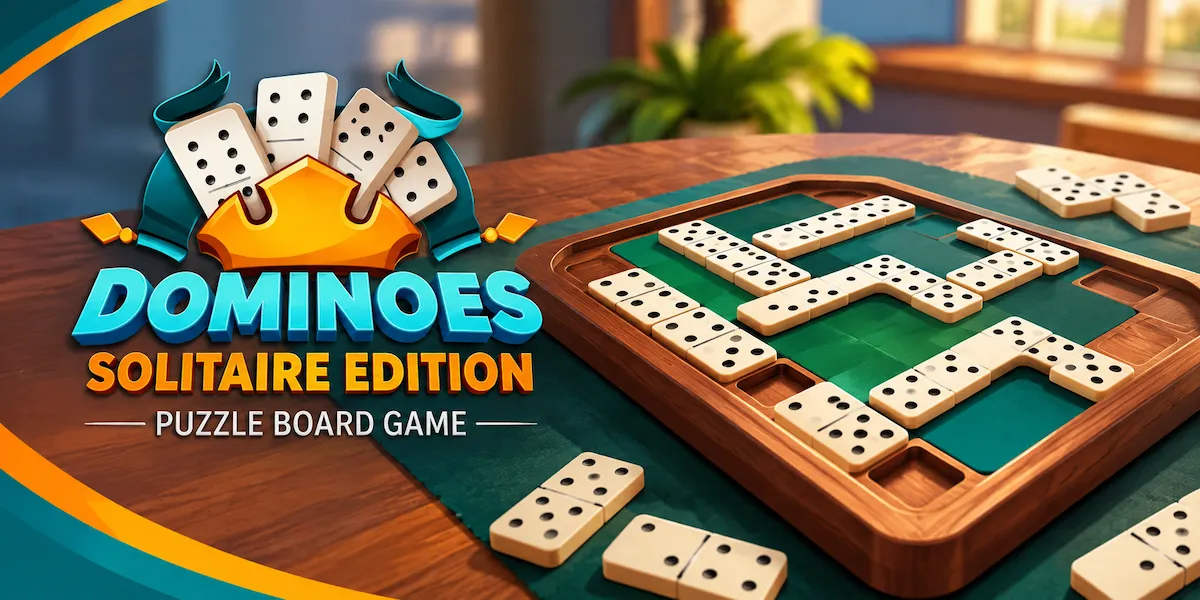
Choosing a domino board is easier when you know what actually affects the playing experience. Board size, material, available table space, tile fit, portability, and the way you prefer to play all matter more than appearance alone.
If you are wondering how to choose a domino board game, start with three questions: Where will you play, how much space do you want for your tiles, and do you prefer a compact setup or a roomier playing area?
This domino board game buying guide breaks down the important differences so you can choose a board that fits your space and playing style.
What Should You Look for in a Domino Board Game?
A good domino board should make play easier, not simply add another piece of equipment to the table. Look at:
- Board size: Does it fit comfortably on your table?
- Playing area: Is there enough room to place and move dominoes without crowding?
- Material: Is the board durable, stable, and easy to maintain?
- Tile compatibility: Will your dominoes fit the playing spaces properly?
- Portability: Will the board stay at home or travel with you?
- Visibility: Can you clearly see the tile layout while playing?
- Storage: Is the board easy to store when it is not being used?
Your ideal choice depends on how these features match the way you actually play.
Choose the Right Domino Board Size
There is no single best size for every player. The right domino board size depends on your playing space and how much room you want around each tile.
Before buying, measure the table, desk, or surface where you expect to use the board. Do not compare only the overall dimensions. Look at the usable playing area as well.
Small Domino Boards
A small Dominoes Solitaire board makes sense when portability and efficient use of space are priorities.
A smaller board may work well for:
- Solo players
- Apartments or smaller rooms
- Desks and compact tables
- Travel
- Players who want quick setup and storage
- Occasional play
The main advantage is convenience. A smaller board takes up less table space and is generally easier to move or store.
The tradeoff is a tighter playing area. If the tiles sit very close together, repositioning pieces may feel less comfortable, particularly for players who prefer more room between moves.
Large Domino Boards
A large Dominoes Solitaire board gives the playing area more breathing room.
Consider a larger board if you:
- Usually play at a full-size table
- Prefer clearly separated tile positions
- Want better visibility across the board
- Play for longer sessions
- Do not need to move the board frequently
- Prefer a more substantial tabletop setup
Extra space can make a domino puzzle board easier to read because individual tiles and possible placements are less visually crowded.
The downside is practical. A larger board requires more table space, more storage room, and may be less convenient to transport.
Small vs Large Dominoes Solitaire Board
| Consideration | Small Board | Large Board |
| Table space | Requires less | Requires more |
| Portability | Easier | Less convenient |
| Storage | Simple | Needs more room |
| Tile spacing | More compact | More spacious |
| Visibility | Good at close range | Better for a wider layout |
| Best suited for | Solo, travel, small spaces | Home play, longer sessions, roomy tables |
Neither option is automatically better. Choose according to where and how often you expect to play.
Check the Dominoes You Plan to Use
Board dimensions are only part of the equation. Your domino pieces also need to fit comfortably.
A standard Western double-six set contains 28 tiles, representing every combination from blank through six. Double-nine sets contain 55 tiles, while double-twelve sets contain 91.
The important point is that these names describe the composition of the set, not the physical dimensions of every tile.
Domino pieces from different manufacturers can vary in length, width, and thickness. Before choosing a physical domino puzzle board, check whether its spaces, grooves, or playing zones are designed for the tiles you intend to use.
A board that looks large enough overall may still feel awkward if its individual tile spaces are too narrow.
Which Domino Board Material Should You Choose?
The board material affects weight, durability, sound, feel, cleaning, and appearance. Common domino board materials include wood, acrylic, composite wood, and plastic.
Wood
Wood is a strong option for players who want a traditional tabletop feel.
Advantages include:
- Solid feel during play
- Good stability on a table
- Natural appearance
- Suitable for frequent home use
- Potential for long-term durability when properly finished
Wooden boards can be heavier than other options, which is useful when you want the board to stay firmly in place.
However, finish quality matters. An unprotected or poorly finished surface may be more sensitive to moisture, stains, or scratches.
Best for: regular home players who prefer a substantial, classic board.
Acrylic
Acrylic provides a cleaner, more contemporary appearance. Acrylic is also used in modern domino products and game sets because it can create a smooth, rigid playing surface.
Advantages can include:
- Smooth surface
- Modern appearance
- Easy wiping and cleaning
- Rigid construction
- Strong visual contrast when designed well
One consideration is surface wear. Glossy acrylic may show fingerprints or scratches more easily, and reflections can become noticeable under direct lighting.
Tiles can also sound sharper against a hard acrylic surface than they would on a softer or lined board.
Best for: players who prefer a modern design and an easy-to-clean surface.
MDF or Composite Wood
MDF and other engineered wood materials are commonly used when manufacturers want a flat, consistent board at a more accessible price.
Advantages include:
- Consistent shape
- Smooth printed or laminated surfaces
- Good stability
- Usually less expensive than premium solid wood
The quality of the outer finish is particularly important. Exposed edges or damaged coatings can make composite boards more vulnerable to moisture.
Best for: casual players looking for a practical balance between cost and stability.
Plastic
Plastic boards prioritize low weight and convenience.
They can be a good choice for:
- Travel
- Children or family use
- Frequent moving
- Easy cleaning
- Casual play
Quality varies significantly, however. A thin plastic board may flex or move during play, while a thicker molded design can feel much more stable.
Best for: portability and easy everyday use.
Compare the Playing Surface, Not Just the Material
Two boards made from the same material can feel completely different during play.
Look closely at the surface itself.
Smooth Surfaces
A smooth surface allows tiles to move easily when you need to reposition them. Too little resistance, however, may allow tiles to slide accidentally.
Textured or Matte Surfaces
A lightly textured finish can add grip and reduce glare. This can be useful if you play under bright overhead lighting.
Recessed Tile Spaces
Some domino puzzle boards use defined spaces, grooves, or recessed areas to keep pieces aligned.
These features can be especially useful during solo puzzle play because the board remains organized while you test different placements.
Check the depth carefully. Tiles should be easy to pick up rather than sitting so deeply that moving them becomes inconvenient.
Choose a Board Based on Your Playing Style
A practical answer to how to choose a domino board game is to start with the type of player you are.
For Solo Puzzle Players
Prioritize:
- Clear tile positions
- Comfortable spacing
- Easy tile movement
- Strong visual contrast
- A stable board
When solving a domino puzzle, you may move the same pieces several times before finding the correct arrangement. A board that makes repositioning simple is more useful than one designed mainly for display.
For Casual Players
If you play occasionally, convenience matters most.
Look for a board that is:
- Easy to set up
- Easy to store
- Simple to clean
- Compatible with your existing pieces
You probably do not need the largest or heaviest option unless you specifically prefer that playing experience.
For Frequent Players
Regular players should pay closer attention to construction quality.
Check:
- Surface wear resistance
- Edge finishing
- Board rigidity
- Tile fit
- Stability
- Ease of cleaning
Small inconveniences become more noticeable when a board is used several times a week.
For Travel
Choose a compact board that does not require a large playing surface.
A travel-friendly setup should ideally be lightweight, easy to pack, and quick to assemble.
In this situation, a small Dominoes Solitaire board will usually be more practical than a larger setup.
For Players Who Prefer More Visual Space
Choose a larger playing area.
A large Dominoes Solitaire board can make it easier to scan the complete layout without pieces appearing crowded together. It may also be more comfortable for players who prefer larger movements when placing and removing tiles.
Physical Board or Dominoes Solitaire Mobile App?
A physical board and digital play provide different experiences.
Choose a physical board if you enjoy:
- Handling real dominoes
- Playing away from screens
- A tactile puzzle experience
- Keeping a game permanently available on a table
- Playing as part of a relaxed tabletop routine
A Dominoes Solitaire mobile app may be more convenient when you want to play without carrying tiles or setting up a board.
Digital domino solitaire games can also provide predefined boards and solo puzzle play directly on a phone.
Many players do not need to choose one format exclusively. A physical board works well for deliberate tabletop play, while mobile play is useful when traveling or when there is not enough space to set up a game.
Check These Details Before You Buy
Before making your final decision, run through this quick checklist:
Measure your table.
Make sure the board leaves enough space around it for comfortable play.
Check the playing area.
Overall product dimensions do not always tell you how much usable space is available for dominoes.
Measure your tiles.
Do not assume every physical domino set uses identical dimensions.
Consider storage.
A large board may be enjoyable during play but inconvenient if you have nowhere practical to keep it.
Look at the surface finish.
Choose a finish that provides enough grip without making tiles difficult to move.
Check the edges and corners.
Poor finishing can affect both comfort and durability.
Think about cleaning.
Frequently used boards should be easy to wipe down without damaging the surface.
Choose for your actual playing habits.
A feature only matters if it makes the way you play easier or more enjoyable.
Common Mistakes When Choosing a Domino Board
Buying the Largest Board Available
More space is not automatically better. A board that overwhelms your table can make setup inconvenient.
Choosing by Appearance Alone
A beautiful board can still be frustrating if your tiles do not fit correctly or slide around during play.
Ignoring Tile Dimensions
Check both board and tile measurements before purchasing.
Forgetting About Storage
Consider where the board will go after the game ends, not only where it will sit during play.
Buying for a Playing Style You Rarely Use
If you mainly play solo at a desk, a compact board may make more sense than a large board intended for a dedicated game table.
Which Domino Board Is Right for You?
The best board is the one that fits your space, dominoes, and playing habits.
Choose a small Dominoes Solitaire board when you value portability, compact storage, and efficient use of table space.
Choose a large Dominoes Solitaire board when you want more room between pieces, better visibility, and a more spacious tabletop setup.
Choose wood when you prefer a traditional, substantial feel. Consider acrylic when you want a smooth, modern surface. Composite and plastic options can work well when price, weight, or portability are more important.
Most importantly, compare the usable playing area and tile fit rather than judging a board only by its overall dimensions.
A well-chosen domino board should disappear into the experience. You should be thinking about your next move, not fighting for space, chasing sliding tiles, or wondering where you are going to store the board afterward.
Frequently Asked Questions
What size domino board should I choose?
Choose a board that fits your regular playing surface while leaving enough room to comfortably place, move, and remove dominoes. Smaller boards work well for limited spaces and travel, while larger boards provide more room for visibility and tile placement.
Is a large domino board better than a small one?
Not necessarily. Large boards provide more playing space, while smaller boards are easier to store and transport. The better option depends on your table size and playing style.
What is the best material for a domino board?
There is no single best material. Wood provides a traditional, stable feel, acrylic offers a smooth modern surface, composite boards can provide good value, and plastic is useful when low weight and portability are priorities.
How many dominoes are in a standard set?
A standard double-six set contains 28 tiles, covering every combination from blank through six. Larger double-nine and double-twelve sets contain 55 and 91 tiles, respectively.
Do all dominoes fit every domino board?
No. Physical tile dimensions can vary between manufacturers. Check the dimensions of your dominoes and the usable spaces on the board before purchasing.
Should I choose a physical domino board or play on mobile?
Choose a physical board if you prefer tactile, screen-free play. Choose mobile play when portability and instant access are more important. Using both can give you a convenient option for travel and a dedicated setup for playing at home.
